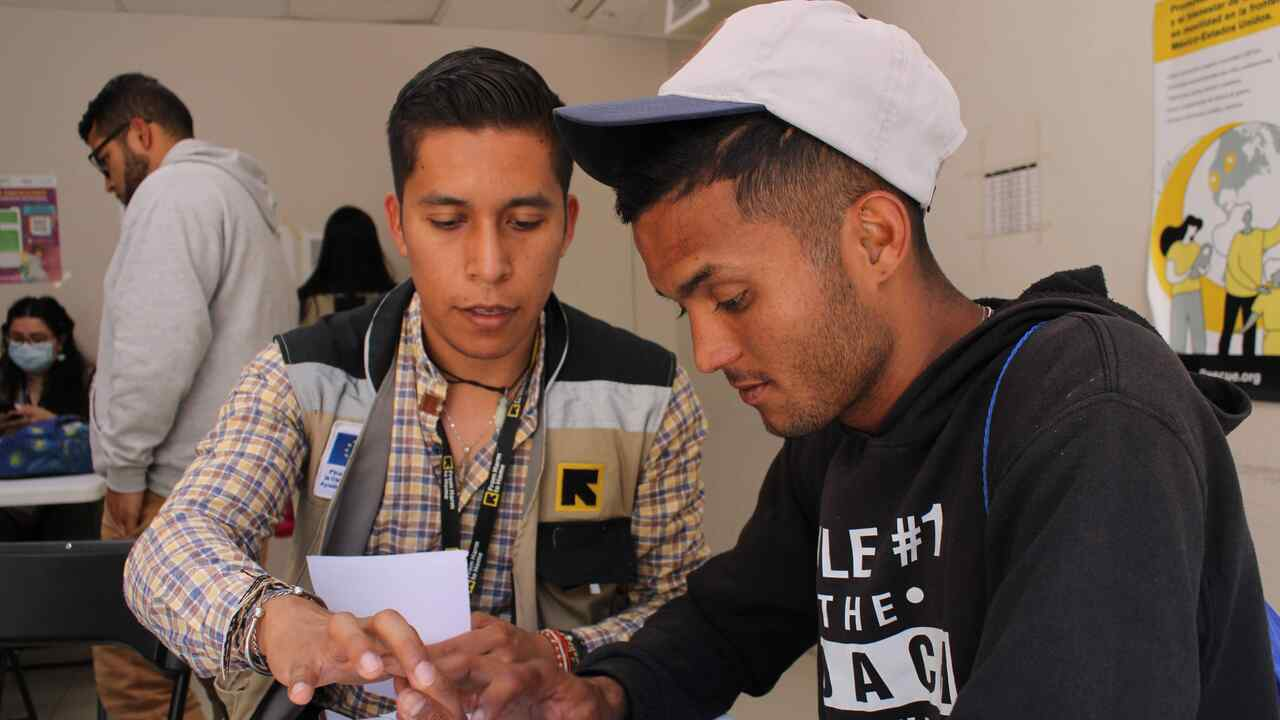
A dirt road stretched toward a temporary encampment, as access to health in rural Mexico often remains out of reach.
The nearest clinic lay hours away. Families waited. Some walked. Some were traveling in caravans. Some went without care.
Then came a van. Bright and steady. It rolled toward the groups gathered there. It offered check-ups, vaccinations, and hope.
For many, it was the first care they had received in months. Maybe years.
But I’m proud to say that at the Sullivan Family Charitable Foundation (SFCF), we’re actively working on changing that.
A Journey Toward Health Equity on Four Wheels
At the International Rescue Committee (IRC) in Mexico, a mobile medical unit backed by the Sullivan Family Charitable Foundation (SFCF) is doing precisely that: bringing essential health services directly to vulnerable communities.
Together, let’s explore why mobile clinics matter, how they advance health equity, and what this investment means for communities that have long been denied consistent access to care.
I hope to invite fellow philanthropists, educators, and community partners to see healthcare not as an isolated good, but as foundational to education, dignity, and opportunity.
What is a Mobile Clinic and Why Do They Matter for Health in Rural Mexico
A mobile health clinic (or “mobile medical unit”) is essentially a fully equipped medical facility, enclosed within a van, bus, or trailer, that travels to communities, rather than requiring individuals to travel to hospitals or fixed-site clinics.
These “clinics on wheels” can offer a wide array of services: primary care, preventive screenings, chronic disease management, dental and vision care, vaccinations, maternal and child health, behavioral health, and health education.
The power of mobile clinics lies in their flexibility: they lower barriers of distance, cost, transportation, and infrastructure that often prevent rural, low-income, or marginalized communities from receiving care.
In many settings, especially areas with limited formal healthcare infrastructure, mobile clinics are the only realistic path to ensure people receive regular, preventive, and compassionate care.
The Power of Mobility and Why Mobile Clinics Are Critical for Health Equity
The value of mobile health services goes beyond convenience.
A growing body of research demonstrates that mobile clinics improve health outcomes, reduce systemic inequities, and offer cost-effective care.
For instance, mobile clinics have been shown to reduce avoidable emergency department visits, potentially saving both patients and health systems significant costs.
Preventive care and early diagnosis, facilitated by mobile units, are often far cheaper than later-stage treatments for chronic disease and can mitigate lifelong health burdens.
Moreover, mobile clinics frequently serve those most at risk: uninsured or underinsured individuals, low-income families, rural communities, migrant populations, and other marginalized groups who face systemic barriers to care.
Mobile healthcare is a practical, scalable instrument for health equity.
Mobile Clinics for Health in Rural in Mexico
In the context of Mexico, mobile medical units have a long history of filling critical health-care gaps, particularly in remote, rural, or otherwise underserved regions.
Successful programs adapt to local realities such as climate, terrain, community structure, and deliver essential care even under challenging conditions.
For example, one longstanding initiative is the fleet of mobile clinics operated by Cáritas, funded in part through grants from partner foundations. These units have provided hearing, vision, dental, and general medical services to more than 22 rural communities in states such as Nuevo León, Tamaulipas, and Coahuila.
Such cases illustrate the real-world feasibility and impact of mobile units, even in regions with limited infrastructure or scattered populations. For many residents, these vans are the only consistent source of medical care.
As we support IRC’s mobile unit in the Mexican state of Chihuahua , we stand on the shoulders of these proven, community-based models, and seek to extend their reach with the stability and partnership that long-term philanthropy allows.
Why Our Partnership with IRC Matters
At the Sullivan Family Charitable Foundation, our commitment goes beyond funding: we believe in relational philanthropy, which is long-term, collaborative, and rooted in community trust.
Supporting IRC’s work for improved health in rural Mexico aligns deeply with our values of equity, opportunity, and inclusive community building.
Through this partnership, the mobile unit can deliver:
• Primary and preventive care, including routine check-ups, chronic disease management, vaccinations, and screenings.
• Maternal and child health services, including prenatal/postnatal care, pediatric checkups, and health education. Similar mobile-clinic models have proven successful in supporting high-risk patients through community-based outreach.
• Behavioral health, dental, vision, and other essential care, depending on community needs; mobile clinics often serve as a first line of defense in underserved areas.
• Flexible outreach, reaching remote or marginalized communities where traditional clinics may be nonexistent and adapting to their needs and circumstances.
Because mobile units are inherently adaptable, they can evolve over time as needs shift: a model especially useful in areas with fluctuating population dynamics, limited infrastructure, or dispersed settlements. We have added a pyscho-social component to specfically address the needs of children on the move.
Our investment helps ensure that this mobile unit remains a sustainable resource, integrated with local health systems and community structures.
Beyond Health: Connecting Care to Education, Opportunity & Community Wellbeing
Health is inseparable from education, opportunity, and community resilience.
When children and families have access to reliable, preventive medical care, especially in early childhood, they are healthier, more stable, and better positioned to take advantage of educational and economic opportunities.
For a foundation whose core mission centers on equitable education and multilingual learning, investing in health makes sense: healthy children are more likely to attend school, perform better, and stay engaged. Healthy families are more stable, and healthy communities are stronger.
Moreover, when mobile health units deliver culturally sensitive and accessible care, they help bridge systemic inequities, especially in communities that may be marginalized due to geography, language, or socioeconomics.
In this way, our support aligns with the broader goal of fostering equitable opportunities for all.
Challenges: What Success Depends On
Of course, mobile health initiatives are not without challenges.
• Logistics and sustainability: Operating a mobile unit in rural or remote settings can mean navigating difficult terrain, extreme climate, irregular population density, and limited local infrastructure. Maintaining staffing, resupply, and equipment adds complexity. Experience in health in rural Mexico and elsewhere shows that success depends on careful planning, adaptability, and strong partnerships.
• Long-term funding and commitment: Mobile clinics often depend on grant-based or philanthropic support. Without stable, multi-year funding (the kind SFCF is committed to) these initiatives risk being intermittent or unsustainable.
• Cultural competence and community trust: Care must be delivered in culturally respectful ways, accounting for language, traditions, and local context. Building trust is essential for long-term engagement and success.
• Continuity of care and integration: For real impact, mobile units should not operate in isolation. They need to integrate with local health systems for referrals, follow-up care, and broader community health strategies.
We believe these challenges are surmountable, especially when addressed with a partnership approach, community engagement, and long-term commitment, all principles fundamental to SFCF’s philanthropic philosophy.
How You Can Help
If you believe, as we do, that access to healthcare is a foundational step toward equity and opportunity, there are several ways to support this vision:
• Partner & donate: Consider contributing financially or through partnerships to support mobile-clinic initiatives ensuring sustainable, long-term care, like this one.
• Advocate & spread the word: Share this story. Raise awareness about health inequities and the power of mobile clinics in underserved areas. Encourage others in your network like fellow philanthropies, community organizations, educators, to consider integrated solutions.
• Collaborate across sectors: Explore partnerships with education-focused organizations. Health + education = stronger communities. By bridging sectors, we can address root causes of inequity more holistically.
A Vision of Dignity, Equity & Opportunity on Four Wheels
A van rolling down a dusty road may seem like a simple thing.
But for many communities, in rural Mexico or elsewhere, it represents something profound: access, dignity, care, and hope.
At the Sullivan Family Charitable Foundation, we believe in long-term, relational philanthropy. We believe in partnerships with organizations like IRC that bring real, tangible change.
Through this mobile unit, we see a model for equitable healthcare, a bridge to stable communities, and a foundation for generations to come.
If you share this vision, we invite you to join us in supporting, partnering, advocating, and imagining a world where geography and circumstance do not determine one’s right to health, education, and opportunity.
Together, we move toward a future where care on wheels becomes care with roots because all communities deserve the chance to thrive.